

HE Manufacturing · Knowledge Center
Blog & Industry Insights Formulation, Private Label & Contract Manufacturing Guides
How to Source Waterless Powder to Lather Formulations?
Table of Contents
- Define the Performance Requirements for a Waterless Powder-to-Lather Formula
- Identify Suitable Surfactants and Supporting Ingredients
- Assess Suppliers, Documentation, and Manufacturing Capabilities
- Request Samples and Test Lathering, Stability, and User Experience
- Verify Regulatory Compliance and Finalize Sourcing Terms
- FAQS
- Conclusion
- Related Posts
Waterless Powder-To-Lather Formulations can reduce the water carried in a finished product, but sourcing them well takes more than choosing a fine, fragrant powder. A buyer should examine the surfactant system, particle-size distribution, moisture level, bulk density, and supplier’s batch controls. Then test the powder in real use: a damp palm, a measured dose, and the time needed to build a stable lather. Small differences matter.
The United Nations World Water Development Report 2024, published by UNESCO, reports that agriculture accounts for about 70% of global freshwater withdrawals. That figure is not a beauty-industry metric, but it gives water efficiency real context. For commercial decisions, compare supplier specifications with independent performance tests, ingredient documentation, and stability data. Ask how each batch is checked. Ask for evidence, not just claims.
One sourcing detail is easy to overlook: a powder that foams beautifully in a laboratory may clump in humid storage or feel gritty on skin. Test packaging, too. A leaking seal can undo careful formulation work. It is not glamorous, but it matters.
I cannot verify a named specialist’s published quotation on this exact formulation category from the materials provided, so I will not invent one. That gap is worth noting. A credible sourcing guide should distinguish documented industry evidence from expert opinion, then help formulators compare suppliers on repeatable lather, user feel, and reliable quality.
Define the Performance Requirements for a Waterless Powder-to-Lather Formula
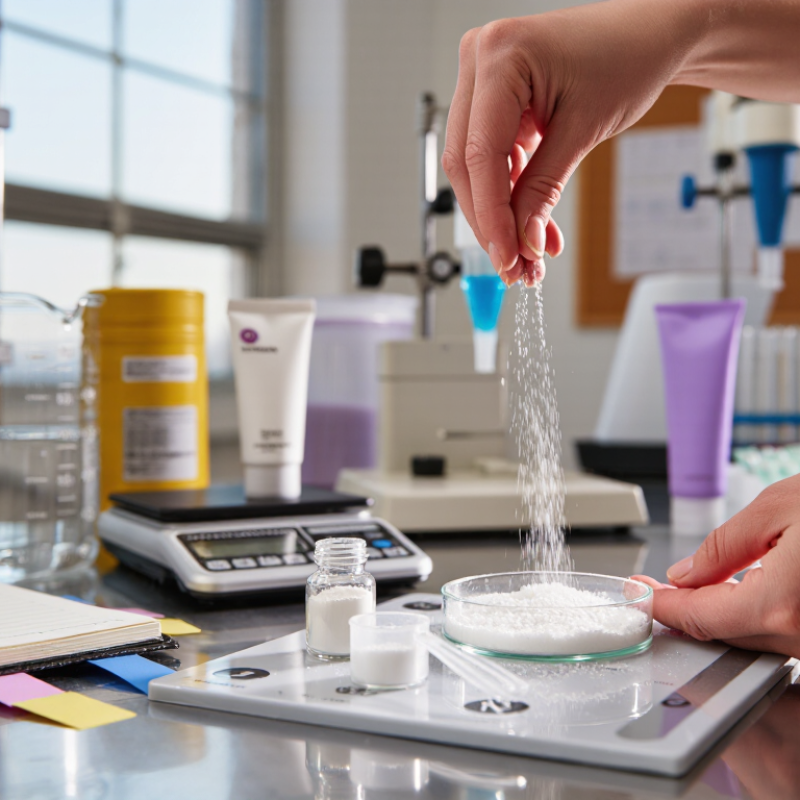
Before sourcing a waterless powder-to-lather formula, define “good performance” in use, not only on a specification sheet. Set a target dose, such as one level teaspoon, and specify how much water users add. Assess wetting time, foam volume, bubble feel, and how quickly the lather rinses away. Keep water temperature, mixing motion, and test vessel consistent. Small changes matter. Record results across several batches; one attractive sample can hide inconsistent flow or clumping. Decide whether the lather should feel dense and creamy or light and quick to rinse.
Particle size and bulk density can affect dosing, dispersion, and airborne dust. Ask suppliers for typical ranges, test methods, and batch-to-batch data, then evaluate samples in the intended packaging. Run storage trials in warm, humid conditions similar to a bathroom. Check for caking, odor changes, poor flow, and slower lathering. Not every lab result predicts a real sink. Include users with different water hardness and washing habits, and set acceptable limits for foam, dissolution time, residue, and skin feel. For skin-contact products, review ingredient identity, allergen information, and relevant quality documentation with qualified specialists. Some targets may need revision after hands-on testing.
Identify Suitable Surfactants and Supporting Ingredients
For waterless powder-to-lather formulas, source surfactants by performance after wetting—not by INCI name alone. Sodium cocoyl isethionate can give a creamy, dense foam; sodium lauryl sulfoacetate often produces quicker lather. Request active matter, particle-size distribution, residual moisture, and bulk-density data. These affect dosing, flow, and dust exposure. Test each lot in the finished blend.
Keep it dry. Powdered surfactants can absorb moisture during storage, causing clumps and uneven dispensing. Add a moisture-tolerant carrier, such as starch or cellulose, to improve flow and soften the feel. A small amount of silica may help, but too much can suppress foam. For hard-water use, assess a compatible chelator, such as sodium phytate. Check the pH after a consumer-sized dose is mixed with water; the dry powder’s pH is not meaningful.
Packaging deserves testing too. UNEP’s 2023 Turning off the Tap report estimated that plastic pollution could be reduced by 80% by 2040 through existing measures, including reuse and recycling. That is not proof that powder formats are automatically better: compare the actual pack and use case. Ask suppliers for safety data, impurity specifications, and batch certificates. Then make small pilot batches and test lather, rinse feel, and caking after humid storage. I would not skip that last test.
Assess Suppliers, Documentation, and Manufacturing Capabilities
Waterless powder-to-lather sourcing starts with evidence, not a sustainability claim. Grand View Research estimated the global waterless cosmetics market at USD 9.4 billion in 2023. Its 2024 report forecast 6.8% annual growth through 2030. This signals commercial interest, not proof that a supplier can produce a stable lather. Ask for evidence. Request current specifications, certificates of analysis, safety data sheets, ingredient declarations, and allergen statements. Check that each document matches the exact grade and production site offered.
Manufacturing capability matters just as much. Ask how the supplier controls moisture, particle size, and batch-to-batch variation. Request test results for lather, rinse-off, and stability in the intended package. A fine powder may foam well in a lab but clump after repeated bathroom exposure. Small details matter. Review traceability records, change-control procedures, and capacity for pilot batches before discussing scale-up. Where possible, observe a production run or audit the facility. Confirm who tests microbial quality and how out-of-spec batches are handled. Do not treat a polished sample as proof of repeatable performance. Even a complete document pack can miss practical weaknesses, so record open questions and verify them with testing.
Request Samples and Test Lathering, Stability, and User Experience
Request samples in the exact grade and format you plan to purchase. Ask for the ingredient list, recommended use level, and storage guidance. A small pouch is enough for an initial bench test. Record the powder’s color, scent, texture, and how easily it disperses. These details can reveal differences between samples before a larger order.
Test lather with a measured amount of powder and water. Keep the water temperature, volume, and mixing time consistent. Note how quickly foam forms, whether it feels creamy or airy, and how long it lasts. Try hard and soft water if customers may use both. A dramatic foam is not always the best result. Skin feel matters, too.
Check stability in the finished formula, not only in the raw powder. Watch for clumping, scent changes, or uneven dispensing after repeated opening. Then ask a few testers to use it with wet hands and a damp shower shelf nearby. That can expose practical flaws a neat lab setup misses. Keep the test notes, even when results are messy. One sample may feel excellent but behave poorly after storage; that is worth investigating before finalizing the formula.
Verify Regulatory Compliance and Finalize Sourcing Terms
Before sourcing a waterless powder-to-lather formula, verify the documents for both the ingredients and the finished product. Request current specifications, certificates of analysis, safety data, allergen information, and origin details. Check that ingredient names, labeling, and proposed claims fit the cosmetic requirements of each intended sales market. Requirements can vary. Keep a record of your review, including document dates and unresolved questions. A tidy file is useful, but it does not replace qualified regulatory advice.
Tips: Ask for a small sample and test it with the intended water amount. Note lather, residue, scent, and how the powder behaves in humid storage. Ask how the supplier controls batch consistency.
Finalize sourcing terms in writing. Define the formula specification, acceptable tolerances, minimum order quantity, lead time, payment schedule, and packaging requirements. For powder, discuss moisture barriers and shipping conditions; a sample that performs well in a dry room may behave differently after transit. Agree on how changes to ingredients or manufacturing will be communicated, and what happens if a batch misses the agreed specification. Retain a reference sample from an approved lot where practical. Some details may still need revision after pilot production, so leave room to review them before committing to repeat orders.
FAQS
Request current specifications, a certificate of analysis, safety data sheets, ingredient declarations, and allergen statements. Check that each matches the exact grade and production site.
Ask how moisture, particle size, and batch variation are controlled. Review traceability records, change-control procedures, pilot-batch capacity, and out-of-spec handling. Small details matter.
Use the exact grade and format planned for purchase. Note its color, scent, texture, and how easily it disperses.
Measure powder and water, then keep temperature, volume, and mixing time consistent. Record how quickly foam forms, its feel, and how long it lasts.
Yes, test hard and soft water if customers may use both. More foam does not always mean a better experience.
Test the formula in its intended package. Watch for clumping, scent changes, or uneven dispensing after repeated opening.
Ask a few testers to use wet hands near a damp shower shelf. A tidy test can still mislead.
Review test notes and resolve open questions before finalizing the formula. A sample may feel excellent but behave poorly after storage.
Conclusion
Sourcing Waterless Powder-To-Lather Formulations begins with clear performance goals. Define how quickly the powder should activate, the amount and texture of lather desired, how it should feel on skin or hair, and what packaging and shelf-life requirements apply. These criteria help guide the selection of suitable cleansing surfactants and supporting ingredients, such as materials that improve flow, dissolution, mildness, or sensory feel, while keeping the formula practical to manufacture.
Next, evaluate suppliers for ingredient quality, traceability, technical documentation, and production capabilities. Request samples and test them under realistic conditions for lathering, ease of use, stability, and overall user experience. Record results against the original requirements and address any formulation or packaging issues before moving forward. Finally, confirm that the ingredients and finished product meet the applicable regulatory and safety requirements for the intended markets, then agree on specifications, testing expectations, lead times, pricing, and supply terms. A structured process reduces sourcing risks and supports a consistent, user-friendly final product.

Blog Tags: