Featured Private Label Hair Conditioner Formulations
Explore our high-performance, market-ready hair treatment portfolio. Each formulation is fully customizable in active concentration, viscosity, natural fragrance profiles, and sustainable packaging.
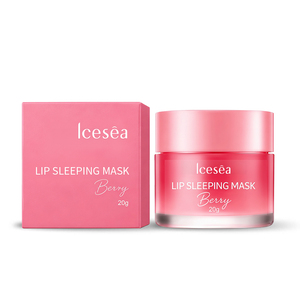
Deep Repair Keratin & Berry Extract Hair Conditioning Mask
- Active Ingredients: Hydrolyzed Keratin, Berry Complex
- Function: Split-end bonding, fiber rebuilding
- Texture: Rich Butter Cream (pH 3.8 - 4.2)
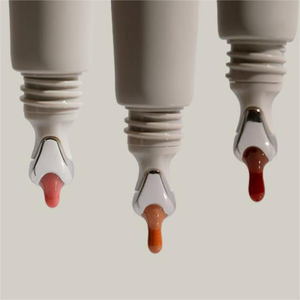
Peptide Complex Volumizing & Fine Hair Plumping Conditioner
- Active Ingredients: Copper Tripeptide-1, Biotin
- Function: Weightless root lift, shaft thickening
- Texture: Lightweight Emulsion (pH 4.5)
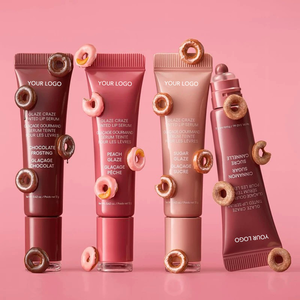
Botanical Tinted & High-Gloss Leave-In Daily Conditioner
- Active Ingredients: Argan Oil, Plant Polyols
- Function: UV protection, shine enhancement
- Texture: Silky Cream Lotion (pH 4.0)
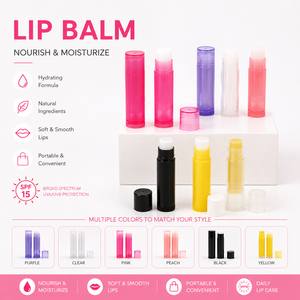
Waterless Honey Peach Scalp Hydrating Conditioner Stick
- Active Ingredients: Peach Kernel Oil, Ceramides
- Function: Zero-waste, targeted fiber balm
- Texture: Solid Balm-to-Melting Oil
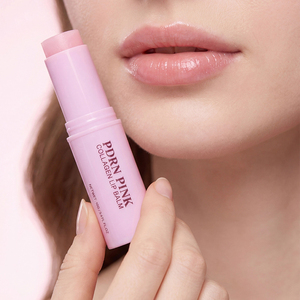
Hydrolyzed Collagen & Sodium DNA Scalp Anti-Aging Conditioner
- Active Ingredients: PDRN / Sodium DNA, Marine Collagen
- Function: Follicle revitalization, moisture locking
- Texture: Cream Gel (pH 4.2)
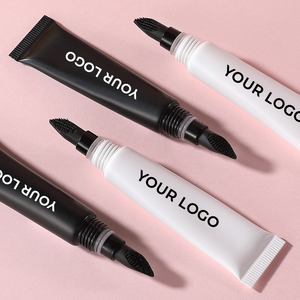
100% Clean Vegan Organic Scalp Soothing Repair Conditioner
- Active Ingredients: Fermented Aloe, Camellia Oil
- Function: Sensitive scalp relief, anti-frizz
- Texture: Velvet Cream (Silicone-Free)
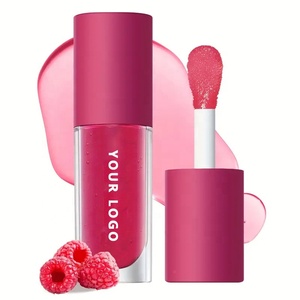
Professional Salon-Grade Ultra-Smoothing Liquid Conditioner
- Active Ingredients: Amino Acid Complex, Silk Proteins
- Function: 24H Humidity control, instant detangling
- Texture: Fluid Rinse-Out Lotion
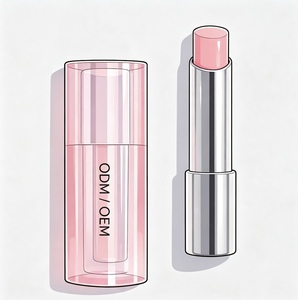
Clear Rose Moisture-Lock Leave-In Polish Hair Conditioner
- Active Ingredients: Hyaluronic Acid, Rose Hydrosol
- Function: Split-end sealant, flyaway tame
- Texture: Crystal Clear Gel-Lotion
State of China's Private Label Hair Conditioner Manufacturing (2026 Procurement Guide)
An authoritative analysis of contract manufacturing capabilities, biochemical formulation breakthroughs, cost structures, and supply chain resilience for international hair care brands.
The global professional and retail hair care market is undergoing a structural paradigm shift. According to recent trade data, the demand for specialized, targeted hair conditioners—spanning post-bleach keratin reconstruction, scalp-microbiome balancers, and waterless solid formulations—is growing at a CAGR of 7.4%. For brand owners, global distributors, and retail chain buyers, selecting the best private label hair conditioner manufacturer in China is no longer merely a pricing calculation; it is a strategic decision encompassing regulatory compliance, bio-chemical R&D, and supply chain agility.
As a premier contract manufacturer operating audited ISO 22716 and GMP facilities, our enterprise bridges state-of-the-art Asian manufacturing scale with international brand standards. China's cosmetic manufacturing ecosystem offers unparalleled advantages: vertical integration of chemical raw materials, rapid prototyping of active complexes, automated high-viscosity emulsification systems, and seamless international freight documentation under US MoCRA (Modernization of Cosmetics Regulation Act) and European Union CPNP frameworks.
Future Procurement & Sourcing Trends in Private Label Hair Care
To capture high-margin market share, global procurement teams must align product development with emerging consumer behaviors and biochemical innovations.
1. Scalp-First "Skinification"
Conditioners are extending beyond simple shaft lubricity. Modern buyers demand active ingredients traditionally reserved for facial skincare—such as Sodium DNA (PDRN), Copper Peptides, Niacinamide, and Hyaluronic Acid—to nurture the scalp barrier while conditioning hair fibers.
2. Clean Beauty & Green Surfactants
Global retailers are phasing out non-biodegradable silicones (D4/D5) and harsh quaternary ammonium compounds. Supply chains are migrating toward bio-derived cationic surfactants (e.g., Brassicyl Isoleucinate Esylate) and RSPO-certified palm derivatives for eco-friendly compliance.
3. Waterless & Concentrated Formulations
Freight cost optimization and carbon neutral mandates have accelerated the adoption of solid conditioner sticks, travel-friendly bars, and anhydrous powder-to-lather formulas, reducing international shipping weight by up to 65% per unit volume.
4. Molecular Bond Rebuilding
Post-bleach and thermally damaged hair requires deep disulphide and hydrogen bond restoration. OEM formulations now integrate maleic acid derivatives and hydrolyzed micro-proteins capable of penetrating the hair cortex rather than coating the cuticle superficially.
5. Transparent Regulatory Traceability
With the enforcement of US MoCRA and strict EU Cosmetics Regulations, brands require contract manufacturing partners capable of providing full Safety Assessments (CPSR), heavy metal testing, and batch-level stability dossiers prior to port clearance.
Strategic Sourcing Models: OEM vs. ODM Comparison
Understanding the operational and financial differences between Original Equipment Manufacturing (OEM) and Original Design Manufacturing (ODM) for hair care lines.
| Evaluation Parameter | OEM (Custom Formulation) | ODM (Turnkey Private Label) |
|---|---|---|
| Formulation Ownership | Brand owns proprietary IP and formula specifications. | Manufacturer provides pre-tested, turn-key catalog formulas. |
| Time-to-Market | 12–16 Weeks (includes R&D stability & microbial testing). | 4–6 Weeks (pre-stabilized, fast-track filling). |
| Minimum Order Quantity (MOQ) | 5,000 – 10,000 Units per SKU (batch tank constraints). | 1,000 – 3,000 Units per SKU (flexible filling). |
| Unit Cost Structure | Optimized for high-volume scale; lower raw material cost. | Slightly higher unit cost; zero upfront R&D investment. |
| Regulatory Testing | Full 5-condition stability, freeze-thaw & challenge test required. | Pre-validated dossiers available for MoCRA / EU CPNP filing. |
| Best Suited For | Established global beauty brands, salon chains, retail networks. | Indie brands, Amazon sellers, rapid trend testing. |
Reference from integrated regional manufacturing hubs: Combining European formulation standards with Asian industrial efficiency under audited GMP environments.
ISO 22716 & US MoCRA Audited Facilities
Our cleanrooms operate under Class 100,000 positive pressure airflow, compliant with global ISO 22716 Cosmetics GMP standards and officially registered with the US FDA MoCRA portal.
In-House R&D & Advanced Testing Labs
Equipped with vacuum homogenizer emulsifiers, high-performance liquid chromatography (HPLC), and 5-condition stability chambers to ensure 36-month shelf life integrity under variable global climates.
Halal & RSPO Sustainable Sourcing
Fully certified by recognized Halal bodies (JAKIM compliant) and committed to sustainable palm oil sourcing (RSPO member), enabling easy expansion into Middle Eastern and Southeast Asian retail markets.
End-to-End Export & Regulatory Dossiers
From COA (Certificate of Analysis) and SDS (Safety Data Sheets) to Certificate of Free Sale (CFS) and Heavy Metal / Microbiological reports, we handle all compliance documentation for customs clearance.
Frequently Asked Questions (B2B Sourcing FAQ)
Essential insights for brand managers, procurement heads, and supply chain directors sourcing private label hair care products from China.
What is the standard MOQ for private label hair conditioner manufacturing?
Our Minimum Order Quantity (MOQ) depends on the chosen production model. For stock ODM white-label formulas with standard packaging, MOQs start as low as 1,000 to 3,000 units. For fully customized OEM formulations requiring bespoke fragrance blending, custom bottle molding, or specialized active ingredient synthesis, our standard batch tank size dictates an MOQ of 5,000 to 10,000 units per SKU.
How do you ensure hair conditioner stability and viscosity control across global shipping?
Hair conditioners are complex cationic emulsions. We conduct rigorous analytical testing on every batch: 5-condition stability testing (4°C, 25°C, 45°C, 50°C, and light exposure for 12 weeks), freeze-thaw cycle testing (-10°C to 40°C across 5 cycles), and high-speed centrifugation (3,000 RPM for 30 minutes) to guarantee zero phase separation or viscosity drops during transit across ocean freight container environments.
Can you formulate silicone-free and clean vegan hair conditioners?
Yes. We specialize in Clean Beauty standards compliant with Sephora, Ulta, and EU clean cosmetics lists. We replace synthetic dimethicones and cyclomethicones with natural plant-derived esters (such as Coco-Caprylate/Caprate, Hydrogenated Ethylhexyl Olivate, and Crambe Abyssinica Seed Oil) to achieve superior slip, combability, and shine without build-up.
What regulatory documentation do you provide for export to the US and EU?
We supply full export documentation portfolios, including: ISO 22716 GMP Certificate, Certificate of Analysis (COA), Safety Data Sheets (SDS) per GHS standards, Microbiological & Heavy Metal Test Reports, Stability & Challenge Test Data, and INCI Ingredient Breakdown required for US MoCRA facility listing and EU CPNP (Cosmetic Product Notification Portal) filings.
What is the typical turnaround time from contract signing to shipment?
For ODM orders using existing benchmark formulations, lead time is approximately 4 to 6 weeks following artwork approval. For custom OEM formulations, the timeline spans 10 to 14 weeks: 2–3 weeks for formula matching and sample sign-off, 4 weeks for stability/challenge testing, and 4 weeks for mass raw material procurement, emulsification, filling, and final QC inspection.
Do you support eco-friendly and sustainable packaging options?
Extensively. We partner with audited packaging suppliers to offer Post-Consumer Recycled (PCR) HDPE and PET bottles, aluminum refill tubes, bio-degradable sugarcane tubes, and waterless solid formats (conditioner bars and sticks) that drastically eliminate single-use plastics.